bee raw materials for factory: Industry Sourcing Guide

วัตถุดิบจากผึ้งสำหรับโรงงาน: คู่มือเลือกให้ตรงอุตสาหกรรม | bee raw materials for factory

Bee Raw Materials for Factories: A Complete Guide to Sourcing by Industry

In today’s manufacturing landscape, bee raw materials for factory go far beyond a jar of honey on a supermarket shelf. They span a full range of natural compounds — each with distinct properties that now serve the food, cosmetic, pharmaceutical, and health supplement industries on an industrial scale.

Whether you’re a procurement officer, factory operator, or brand founder sourcing natural ingredients, understanding the types, quality standards, and selection criteria for bee-derived raw materials is the most important first step.

How Many Types of Bee Raw Materials Are There?

A single beehive produces up to 5 types of commercially valuable substances, each with unique industrial applications:
ผลิตภัณฑ์จากผึ้ง 5 ประเภทหลัก

1. Honey

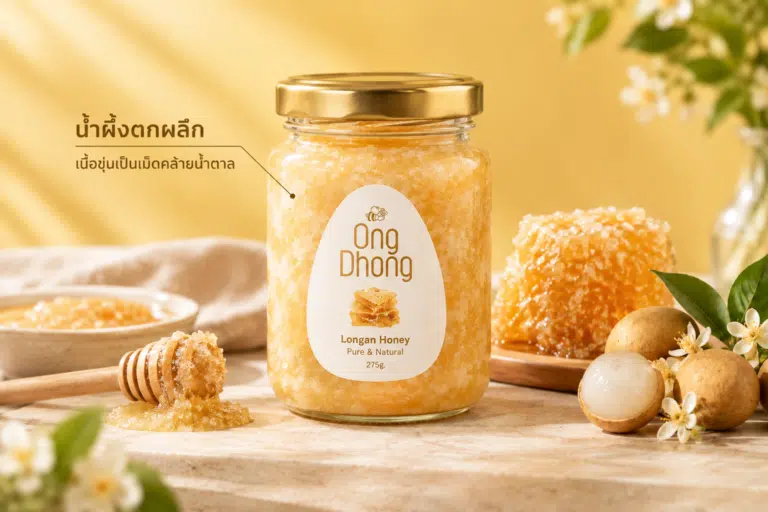
Honey is the highest-demand raw material in the bee product category. It serves the food and beverage industry as a natural sweetener, flavor enhancer, and functional ingredient — used in sauces, jams, baked goods, and health drinks. For factory use, honey variety should match the product’s flavor profile: longan blossom honey offers a distinctive floral note ideal for premium beverages, while wildflower honey suits broader food manufacturing applications.

Industrial-grade honey must maintain moisture content below 21% and pass HMF (Hydroxymethylfurfural) testing within international food safety thresholds.

2. Royal Jelly

Royal jelly is secreted by worker bees to feed the queen. Rich in protein, essential amino acids, and B-complex vitamins, it is in high demand across the nutraceutical, cosmeceutical, and skincare industries. Factories using royal jelly should verify the 10-HDA (10-Hydroxy-2-decenoic acid) content as the primary quality marker.

3. Beeswax

Sourced directly from honeycomb, beeswax acts as a natural emulsifier with excellent heat resistance and chemical stability. It is an indispensable ingredient in cosmetics (lipsticks, moisturizers, sunscreen), candles, floor polish, and food coatings — making it one of the most versatile bee-derived raw materials for factory production lines.

4. Propolis

Propolis, or bee glue, is collected by bees from plant resins to seal and protect the hive. It is highly valued for its antibacterial, antiviral, and anti-inflammatory properties. Propolis is widely used in dietary supplements and oral care product manufacturing.

5. Bee Pollen

Bee pollen is packed with protein, vitamins, minerals, and antioxidants. It is commonly incorporated into supplement capsules, granola, and functional food products.

How to Select Bee Raw Materials for Your Factory

💡: Not sure which bee raw material fits your production line? The expert team at Honey Polyplus offers free consultations and can send product samples for quality evaluation before you commit to an order.
Choosing the right bee raw materials for factories goes beyond price comparison. Here are the four key criteria procurement teams should evaluate:

1. Manufacturing Standards
A trustworthy supplier — particularly one operating as an international-standard honey factory — must hold GMP (Good Manufacturing Practice) and HACCP certifications, along with registration from the local food regulatory authority. If your factory produces goods for export, additional ISO certification or market-specific compliance documentation will also be required.

2. Batch Consistency
Factories require raw materials with consistent specifications across every batch to maintain finished product quality. Suppliers who own their own bee farms and control production from source typically offer stronger consistency guarantees than traders or brokers.

3. Traceability and Transparency
As consumers increasingly demand to know where ingredients come from, full supply chain traceability has become both a marketing advantage and an export requirement in many markets.

4. Production Capacity and Continuity
Procurement teams should verify that the supplier can meet current volume requirements and has the capacity to scale with future demand growth.

Industries That Use Bee Raw Materials Most

Food & Beverage — Honey is used as a natural sweetener and flavoring agent in products ranging from fruit juices to cereals and condiments.

Cosmetics & Skincare — Beeswax and royal jelly are core ingredients in moisturizers, face masks, lip products, and anti-aging formulas.

Nutraceuticals & Supplements — Royal jelly, propolis, and bee pollen are in high demand in the fast-growing health supplement market.

Pharmaceuticals — Propolis is actively researched and incorporated into oral health products, immune support formulas, and specialty vitamins.

Global Trends 2026 in Bee-Derived Ingredients

The global bee product market continues to grow, driven by the Clean Label movement, rising demand for Natural Ingredients, and consumers shifting toward holistic health. Factories that reformulate products using bee-derived raw materials in place of synthetic additives are well positioned to build a compelling premium brand story — for both domestic and export markets.

Source Bee Raw Materials for Factory Here

For factories and operators seeking bee raw materials that deliver consistent quality, full traceability, and industrial-scale supply, Honey Polyplus stands as one of Thailand’s largest bee product manufacturers and distributors. Backed by over 43 years of expertise, a GAP-certified farm of 2,000+ hives, and a network of more than 200 registered partner farms, the company produces upwards of 1,000 tonnes of honey annually. With a dedicated honey OEM manufacturing service and full GMP, HACCP, and FDA certification, Honey Polyplus is equipped to support every stage of your production needs.
📦 Ready to source bee raw materials for your factory? Contact the Honey Polyplus team today for product specifications, B2B pricing, and sample requests.